complain.png


flag.png


united-kingdom.png


DENTAL MANPOWER


Public Health Dentistry Activities, 49% OFF | superig.com.br   


5.1 Developing Competency and Proficiency of Dental Professionals

The need for qualified dental practitioners to address the prevailing dental needs of the nation led to the establishment of a dental school in the King Edward VII College of Medicine in Singapore in 1926. The initial response was disappointing with no applicants. Between 1927 and 1929, seven enrolled for the four-year course, only to leave during or after the first year.

Undaunted, the institution reinstated the school with the appointment of the first Professor of Dental Surgery and Head of Dental School, Professor Edgar K. Tratman. A five-year course based on the British syllabus was introduced. The first graduate received the Licentiate in Dental Surgery (LDS) in 1933.

Despite the Japanese Occupation during World War II (1941 - 1945), there was development in dental education. The Japanese administration mandated continued training for medical and dental students. Paradoxically, while supporting efforts for trained professionals, the Japanese authorities also issued licences to all who wished to practise dentistry. This led to a tremendous increase in the number of unqualified dentists during this period. Even with the take over by the British Military Administration at the end of World War II, these unqualified dentists were allowed to continue plying their trade.

With peace in the country, the King Edward VII College reopened in 1946 and candidates who had earlier been awarded diplomas under Japanese rule were made to re-sit their professional examinations. They were duly awarded the LDS on successful completion of the examinations. The General Medical Council of the United Kingdom conferred official recognition on the LDS (Singapore) in 1946. With the formation of the University of Malaya (Singapore) in 1949, the King Edward VII College was renamed the Faculty of Medicine and the dental school remained a department within the Faculty. The degree of Bachelor in Dental Surgery (BDS) replaced the LDS.

A legislation passed in 1961 resulted in the University of Malaya (Singapore) being designated the University of Singapore on 1 January 1962. This also led to the founding of the University of Malaya (Kuala Lumpur) in the same year. However, it was only in 1972 that the Faculty of Dentistry was established in University of Malaya, with its first intake of 32 students. Development of the Faculty led to the establishment of postgraduate training in 1994, with the Master in Community Dentistry, expanding later into fields of clinical dentistry. A year later in 1995, the undergraduate programme was revised and the period of study extended from four years to five years. The course gained recognition from the General Dental Council of Great Britain in 1998.

The second dental school was established in University Kebangsaan Malaysia in 1997 and subsequently a third in Universiti Sains Malaysia at Kubang Kerian in 1998. This helped to address the projected target of 1 dentist for every 4,000 citizens by 2020.  As of 2017, the dentist to population ratio was 1:3,728. There are now 13 universities offering basic dental degrees in Malaysia, of which 6 are government institutions and 7 are private.


Chronological Development of Basic Dental Degree in Malaysia


Year

Name of Institution of Higher Education

1972

University of Malaya (UM)

1996

Universiti Kebangsaan Malaysia (UKM)

1999

Universiti Sains Malaysia (USM)

2005

Universiti Teknologi Mara (UiTM)

2007

International Islamic University of Malaysia (IIUM)

2007

Universiti Sains Islam Malaysia (USIM)

2005

AIMST University

2005

2006

2007

2008

2011

2013

Penang International Dental College (PIDC)

MAHSA University

International Medical University (IMU)

Melaka-Manipal Medical College (MMMC)

SEGi University

Lincoln University College (LUC)


5.2. Education of Dental Auxiliaries


Dental Nurses

With the shortage of qualified dental professionals to meet the needs of 50% of the population, which were under 18 years of age with 'appalling' dental conditions, the dental nurses' scheme was introduced in the civil service in 1948. This was based on a scheme in New Zealand that had by then utilised dental nurses for 25 years. In the Ministry of Health (MOH) Malaysia, the school dental service was also launched in the same year.

In 1949, the Dental Training School was established within the premises of the Penang General Hospital with its first Director, Mr. Charles F. Mummery. The initial group of students were selected from among State Registered Nurses and trained in dental operatory procedures. 1950 saw the graduation of the first batch of 14 dental nurses on completion of a one year course.

Since then, the school has expanded to include the training of dental technologists in 1951 and dental surgery assistants in 1981. It has its own complex, officially opened in 1966, designated the Children's Dental Treatment Centre and Dental Training School Malaysia. Since 2003 the institution has been officially known as the Dental Training College of Malaysia. The school, being a pioneer in the training of dental nurses in the region, also became an avenue for training of dental nurses for other countries, such as Singapore, Brunei, Burma, Hong Kong and Nigeria.

Dental nurses complement the dental surgeons. They provided simple and basic clinical treatment to children, limited at first to those aged 12 years and below. In 1977, the scope was extended to include children up to 17 years of age. Dental nurses also undertake integrated preventive and dental health education activities. As a member of the dental team, the dental nurse remains to this day under the supervision of the dental officer.

Dental nurses are trained and employed in the public sector only and standards and qualifications are established by the government. Within the public sector, practice guidelines, expected productivity, quality improvement initiatives, continuing education, work ethics and disciplinary procedures are well established. Existing policies indicate that the government will continue to train dental nurses according to the needs of the public sector. In fact, demand for dental nurses has far exceeded supply due to expansion of the public oral healthcare of the MOH. From the first five nurses in 1949, there are now 2,836 dental nurses in service in the MOH as at 31 December 2017.


Dental Technologists

Dental technologists began as dental mechanics who were trained at the King Edward VII College, Singapore. A course for dental mechanics was started at the Dental Training School in Penang in 1951. The nomenclature dental mechanics evolved to dental technicians in 1959 and to dental technologists in 1996 to reflect the change in role of this category. In the MOH, dental technologists are expected to not only function in the dental laboratory but to also engage in biomedical engineering aspects in the management of dental equipment. Unlike the dental nurses, dental technologists may be employed in the private sector. There are now 1,855 dental technologists of which, 923 are employed in the MOH, 119 are employed in other government facilities and 813 are employed in the private sector, as at 31 December 2016.


Dental Surgery Assistants

In 1951, the Assistant Nurse (Dental) Scheme was introduced with the aim of providing clinical support to dental surgeons. This group of auxiliaries had to undergo a two-year in-service course. Subsequently, in 1959 they were re-designated Dental Surgery Assistants (DSA), and remain so to this day. However, the formal DSA training programme at the Dental Training School only began in 1982. In 1993, the training incorporated the distance-learning concept. There are now 4,177 dental surgery assistants, of which 3,783 are in the MOH, 341 in other government facilities and 53 are in the private sector as at 31 December 2016.



PREVENTION FOR ALL : WATER FLUORIDATION 


Water Fluoridation in Canada — Safe Drinking Water Foundation


The people of Johor Bahru have been receiving fluoridated water as early as 1957. This was followed by water fluoridation in Penang in 1959 and Simanggang in Sarawak in 1961. The Johore state government eventually extended coverage to other areas of the state in 1966. In those days, caries levels were high. In 1963, it was cited that the DMF rate among National Servicemen of average age 21.4 years was 10.181. With a wide disparity between treatment needs and care provided, a Committee on Fluoridation of Public Water Supplies was appointed and mandated by the Minister of Health in 1969 to 'study and report upon the feasibility of introducing fluoridation of public water supplies as a public health measure in all states of West Malaysia'. The recommendations for fluoridation of water were based on extensive review of scientific literature covering equity of caries-protective effects, safety, efficiency and cost-effectiveness of water fluoridation. The Cabinet Committee accepted the recommendations in 1972. It is estimated about 75.7% of the population enjoyed the benefits of a fluoridated public water supply in the year 2017.


BRINGING ORAL HEALTHCARE TO THE COMMUNITY


Scaling up to improve dental health of the marginalised | The Star 

It was also in the latter half of the 1920s that the British administrators began to seriously plan for organised dentistry. In 1929, a building in the Pudu area of Kuala Lumpur, formerly housing the poor, was converted into the first government dental clinic. It was demolished 43 years later in 1972, and replaced by the Cahaya Suria building owned by the Urban Development Authority (UDA). Two floors of this 16-floor building have been allocated to house the headquarters of the Dental Department of the Federal Territory of Kuala Lumpur.


In 1946, a Dental Division was established in the Medical Department and a professional man was appointed to head the dental services in Malaya. Mr. Charles F. Mummery was appointed Chief Dental Officer of the Federation of Malaya and the Straits Settlement and was instrumental in charting the course of the public dental services.

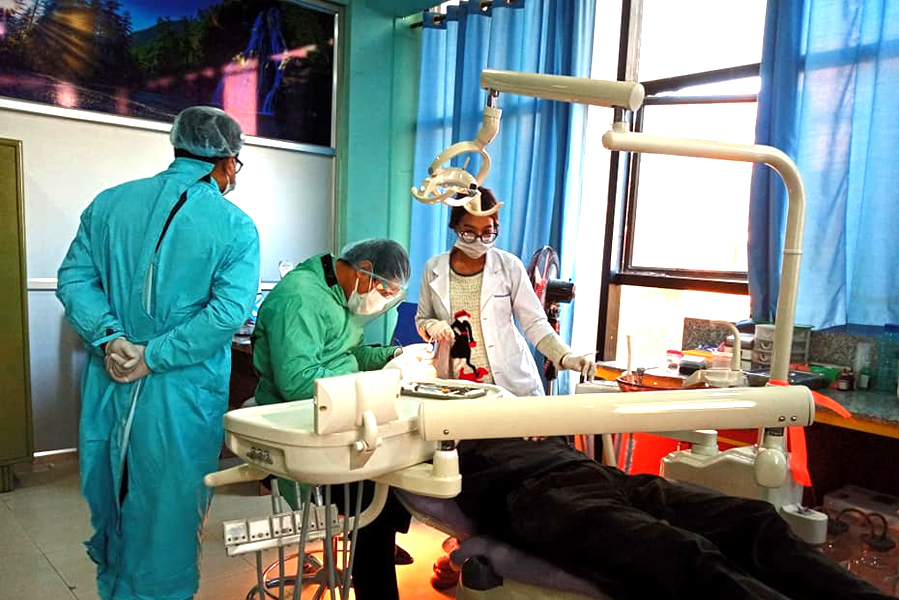
The public dental health services began with British dentists (officially Government Dental Officers) employed in the main hospitals and assisted by locally qualified dentists. These dentists visited districts or towns to undertake emergency dental care for one or two days a week. These part-time dental care centres later became full-time government dental clinics manned by qualified dentists.

In 1947, there were 20 dental officers in the public sector. The bulk of the service continued to be provided by the private sector then consisting of 50 private practitioners and approximately 400 registered dentists.

Development planning and the introduction of Five-Year Plans began in the post-war reconstruction of colonial Malaya. Planning for healthcare then was little more than a list of government departmental projects designed to make use of whatever monies were available. Following World War II, the Emergency consumed the major part of government resources and energies and little was done in healthcare planning until the establishment of the First Malaya Plan (1956-1960) and the Second Malaya Plan (1961-1965). These Five-Year Malaya Plans justified the expansion of healthcare and was the catalysts for expansion of public dental services.

Subsequently, the Malaya Plans became Five-Year Malaysia Plans. These Plans have seen public sector oral health services gaining strength and transforming into the comprehensive, decentralised services of today. In 1970, there were only 398 dental clinics of various types. Today, we are in the Eleventh Malaysia Plan, and there were 1,670 dental facilities, including mobile dental clinics and boats, at the end of 2017. 


3.1 National Concern for Dental Health

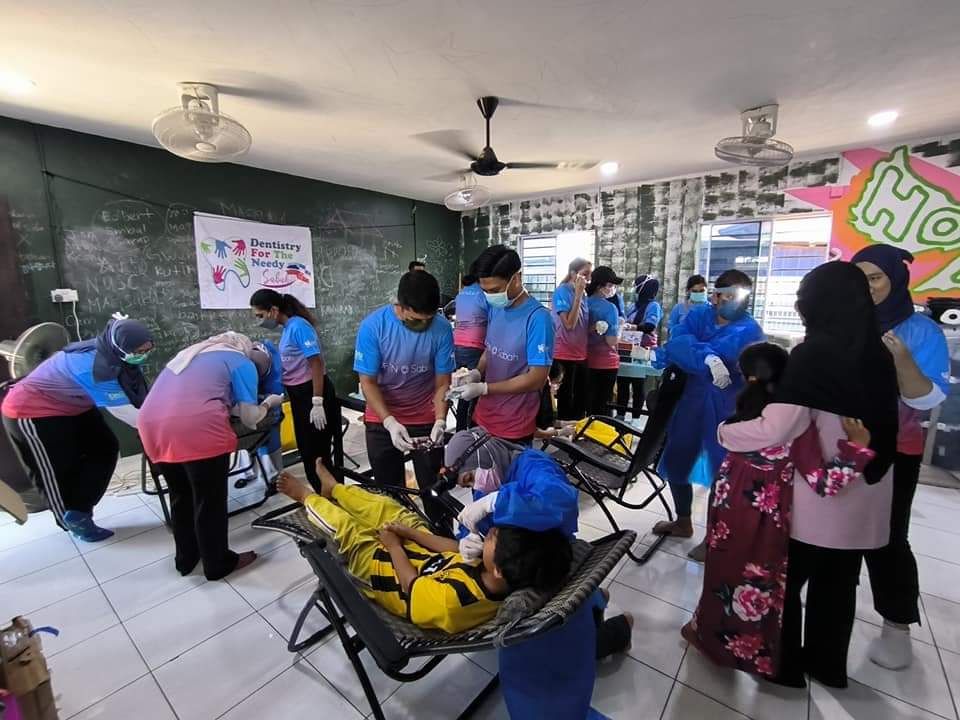
Between the years 1952 to 1963, the organised dental profession began to consolidate its concern for the dental health of the nation. Although this period saw more practitioners venturing into private practice, the states, which had previously relied solely on central control, were now given the mandate to develop their own dental health programmes under the direction of the Principal Dental Officer. It was at this stage that mobile clinics were established. Oral health services were extended to rural populations with an emphasis on school children and ante-natal mothers, and dental health education was integrated into dental care programmes. Dental clinics were established for the general public and for specific groups such as police personnel, the armed forces, prisoners, lepers and TB patients.

Focus is now shifted to the lower-age range target groups,that is the toddlers and pre-schoolers, as well as the young adults after they leave school. Apart from that, taking into consideration that Malaysia is going to be an aged nation by 2030, the oral health of the elderly should not be ignored.


3.2 Oral Healthcare for School Children

In the early 1940’s, with the under-18s forming 50% of the population, and exhibiting oral health which was described as 'appalling', there was a serious need to provide dental services specific for school children. In 1948, the school dental service was launched. In was also in this year that the dental nurses' scheme was introduced, whereby this category of personnel was allowed to provide limited dental services to schoolchildren, under supervision. At first, the dental nurses' scheme was strongly opposed by the profession, but was later accepted when it was proven innovative and advantageous to the country.

By 1952, there were 19 school dental clinics. In the following year, dental components were incorporated in health centres. When the Rural Health Service Scheme was introduced in 1955, dental services extended its coverage to the rural population. By Independence in 1957, there were 55 school dental centres and 40 school dental clinics operated by dental nurses. By 2017, the numbers had increased more to than 923 school dental clinics, including school dental centres.

The School Dental Service is now the core business of dental public sector services. Expansion to cover almost 92% of primary and 60% of secondary school children has been achieved largely through the outreach strategy implemented in the early 1970s. Informally and affectionately known as 'flying squads', these mobile teams, utilising portable equipment, ensure provision of services to all areas. Mobile dental teams increased about from 13 in 1970, to 606 with 36 mobile dental clinics in 2017.


3.3 Oral Healthcare for the Public

Oral healthcare for the public was delivered through main dental clinics. A main dental clinic was officially opened in Kuala Terengganu in 1954 to serve the public, soon to be followed by the development of main dental clinics in other states.

An important milestone at this time was expansion into specialties with dental officers being sent overseas to specialize in oral surgery, orthodontics and dental public health. Specialist services commenced in 1950 with the establishment of oral surgery centres in Johore Bahru and Penang .

Chronological Development of Dental Specialist Services in the Ministry of Health

Year

Specialty Discipline

Total Number of  Dental Specialists

(as of 30 September 2018)

1950

Oral Surgery

78

1954

Orthodontics

70

1961

Dental Public Health

87

1967

Oral Medicine and Oral Pathology

14

1984

Periodontology

42

1985

Paediatric Dentistry

45

2005

Restorative Dentistry

31

2007

Forensic Dentistry

1

2010

Special Needs Dentistry

5

Grand Total Number of Dental Specialists

373


3.4 Oral Healthcare for Specific Segments of the Population

Specific segments of the population also have dedicated access to oral healthcare. In 1953, the Department of Orang Asli Affairs was established to provide services to the indigenous groups residing in interior areas of Malaysia. The Health and Medical Division of the Ministry of Rural Development provided dental services to the 'orang asli' population till 2012, when the service was taken over by the Ministry of Health.

In 1955, a dental clinic was opened at the Sungai Buloh Leprosy Centre in Selangor to cater to the inmates. Two additional clinics for police personnel were set up in Kuala Lumpur and Ipoh. In the 1960s, service expanded to the Pudu Penitentiary in Kuala Lumpur.

In 1958, the Armed Forces Dental Services (AFDS) was established to provide oral healthcare to military personnel and their families. Initially, dental officers were seconded from the Ministry of Health, before . A major focus is to attain and maintain combat readiness and fighting fitness of our troops. Today, the AFDS also undertake outreach programmes as a civic duty, and have also been actively deployed to other countries, where Malaysian troops have been stationed.

The outreach concept of service provision was not confined to merely mobile clinics overland. In 1958, the marine dental clinic became operational, providing oral healthcare along the Perak River.


REGULATING THE PROFESSION


Profession Images – Browse 2,982,458 Stock Photos, Vectors, and Video |  Adobe Stock


The above scenario led to the need to regulate the profession. The latter half of the 1920s saw a greater focus on regulating the practice of dentistry. The first Registration of Dentists' Ordinance of the Straits Settlements was enacted in 1924, while the Federated Malay States had a separate Registration of Dentists Enactment in 1931. However, the 1924 Ordinance was deficient in many aspects, and it was subsequently repealed in 1933 and a second version called the Ordinance for Registration of Dentists 1933 was passed. This legislation prohibited the practice of dentistry by unqualified practitioners and proved the death knell for the 'roadside dentists'.

Following the end of World War II (1941-1945), legislation in Malaya was further strengthened by the enactment of the Registration of Dentists' Ordinance in 1948. This legislation only allowed qualified persons to be admitted to the Dental Register. Qualified dental practitioners in the public and private sectors were registered under the category of Division I Dentists. However, there was a clause that allowed for admission of unqualified dentists already in practice, under a separate section, as Division II Registered Dentists. The condition set was that they should successfully complete an examination conducted by the Dental Board that was set up in the same year.

At that time, there were only 50 qualified dentists on the Register and 166 unqualified dentists. There are now 8,598 qualified private and public dental surgeons and 22 Division II dentists, who are registered with the Malaysian Dental Council as of 31 December 2017.

The enactment of the Dental Act 1971 by parliament gave much-awaited recognition to the profession and signaled the era of contemporary dentistry in Malaysia. The Malaysian Dental Council (MDC) was established under this Act as the executive body to regulate the profession. The Act elucidates features pertaining to the registration and issuance of practising certificates, maintenance of professional standards and enabling powers for the profession to discipline its own members. The registration of Division II dentists was closed in 1972.

The Dental Act 1971 has since undergone several amendments. One, in 1997, was to enlarge the Malaysian Dental Council membership from 20 to 24 members, and to strengthen penalties for offences under the Act. Another amendment was to address the acute shortage of dentists in the public sector. This led to the three-year national service for new registrants with effect from 29 June 2001. In 2012, the Malaysian Dental Council at its 97th Meeting on 29 February 2012 approved the reduction of the compulsory service duration from 3 to 2 years.  This came into effect on 5 April 2012. In 2015, a further reduction of the 2-year compulsory service to 1year was made, effective on 1 July 2015.

The Dental Act 2018 [Act 804] was given the Royal Assent on 19 June 2018 and published in the gazette on 26 June 2018. With the implementation of the Dental Act 2018, the Dental Act 1971 will be repealed. The Dental Act 2018 has far-reaching implications on the practice of dentistry; the most notable being the registration of dental therapists and their practice in the private sector, mandatory CPD and professional indemnity cover for renewal of the practising certificate and enforcement capabilities.

A roadshow to brief practitioners on the important details in the Dental Act 2018 was held in collaboration with the Malaysian Dental Association in all States (except Perlis and WP Labuan) from 20 July 2018 to 5 October 2018

A Legislation and Enforcement Unit was set up under the Oral Health Division in 2007. This unit worked with the Branch for Health in Private Medical Practice of the Medical Practice Division, to implement and enforce the Private Healthcare Facilities and Services Act 1998 (PHFSA) and its Regulations. Dental officers were appointed as enforcement officers in all states, and at present there are 43 dental enforcement officers.

Since the enforcement of the PHFSA in 2006, a total of 2,753 dental clinics have been registered, and regular inspections are carried out in the 2,129 active registered dental clinics, to ensure on-going compliance. Numerous enforcement activities have also been carried out with 46 cases being brought to trial. Of these cases, 26 involved fake braces and 17 involved illegal dental practitioners.


THE EARLY DAYS

  The Evolution of Dentistry. Written By: Eimaan Shahid | by Darshita Prathap  | Medicine Encompassed | Medium 

The earliest record of dentistry in Malaya dates back to 1869, to the island of Singapore, which was then a part of Malaya. The first practitioner was a dentist from Hong Kong by the name of Cheong Chun Tin, who started a private practice after obtaining his qualification in San Francisco. He never thought to formally train his own children. On his demise, his two sons continued their father's practice. They had no formal qualifications and their practice was reflective of a time when unqualified dentists thrived.

Subsequently, Mr James Logan was recorded as having established his practice in Penang in 1899. In 1912, Mr. Frank Moffat was recorded as the first dentist in Kuala Lumpur, describing himself as a 'surgical and mechanical dentist'. During World War I (1914-1918), a Japanese dentist was reported to have arrived on the scene in 1916. This began the migration of dentists into Malaya.